
Imperial College London Publishes WAAM–Conventional Hybrid Construction Study in Engineering Structures, Supported by RONGSU
From aerospace components to large-scale industrial tooling, metal additive manufacturing is increasingly demonstrating its value across a wide range of engineering applications. In the construction sector, however, researchers generally view metal additive manufacturing not as a replacement for conventional fabrication, but as a complementary approach capable of enhancing existing structural systems. Against this backdrop, the concept of hybrid construction—combining additively manufactured components with conventionally produced structural elements—has attracted growing academic attention.
Among the available technologies, Wire Arc Additive Manufacturing (WAAM) is regarded as particularly promising for structural applications, owing to its high geometric freedom, scalability, level of automation, and reduced material waste. These characteristics position WAAM as a potential enabler for new design and construction strategies in steel structures.
01 Hybrid Sleeve Connections Between WAAM and Conventional Tubular Steel Elements
Recently, Dr. Xin Meng and Professor Leroy Gardner from the Department of Civil and Environmental Engineering at Imperial College London conducted a systematic investigation into the structural performance of novel hybrid sleeve connections between WAAM-fabricated components and conventionally produced tubular steel elements. RONGSU provided technical support for the fabrication of the WAAM specimens used in this study.
The research outcomes have been published in the leading journal Engineering Structures under the title: "Novel hybrid sleeve connections between 3D printed and conventional tubular steel elements."
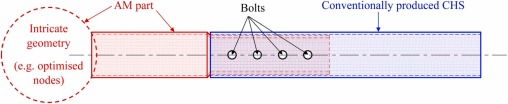
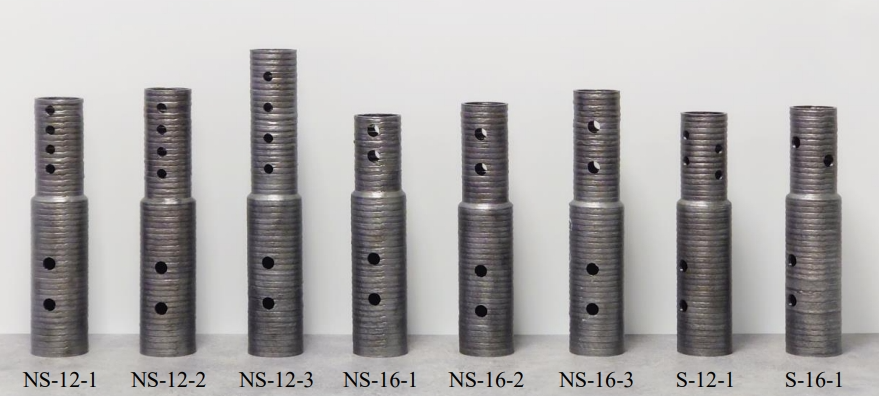
In this study, the authors proposed and experimentally validated a new form of sleeve connection designed to link 3D-printed tubular components with conventional circular hollow section (CHS) members, enabling the formation of hybrid tubular structures. The hybrid sleeve components were fabricated using CMT-based WAAM, tapering into standard hot-finished S355 steel CHS members and connected via bolted joints. The WAAM sections were produced using ER70S wire, consistent with the material specifications reported in the paper.
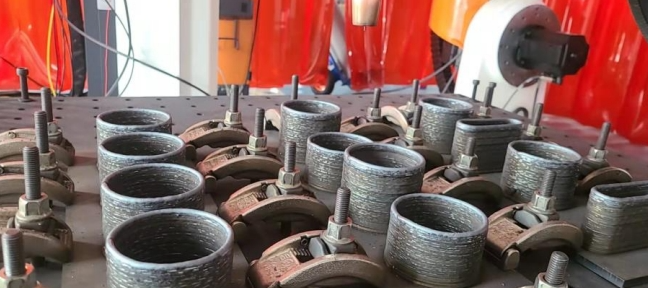
Hybrid sleeve connections between WAAM and conventional tubular steel elements
02 Experimental Findings Supporting EC3 Design Provisions
A comprehensive experimental programme was carried out to evaluate the structural behaviour of the proposed hybrid sleeve connections. The WAAM specimens were subjected to 3D laser scanning to characterise their geometric features, which were then compared with those of conventional specimens in terms of material utilisation, tensile behaviour, deformation capacity, fatigue performance, and resistance.
The test results demonstrated that the 3D-printed hybrid sleeve connections exhibited excellent tensile resistance and deformation capacity overall. In terms of material efficiency, the study showed that hybrid sleeve connections with staggered bolt arrangements required less printed material than those with non-staggered configurations, while still exhibiting the potential to meet structural performance requirements. Further optimisation, however, was identified as necessary to maximise material efficiency.
Quantitative geometric analysis based on 3D laser scanning revealed notable variability in failure modes among the WAAM specimens, while consistently confirming their strong load-carrying and deformation capabilities. Importantly, comparisons with existing Eurocode 3 (EC3) resistance predictions highlighted areas where current design approaches could be refined, providing valuable guidance for the future application of WAAM in structural engineering.
RONGSU's WAAM parts
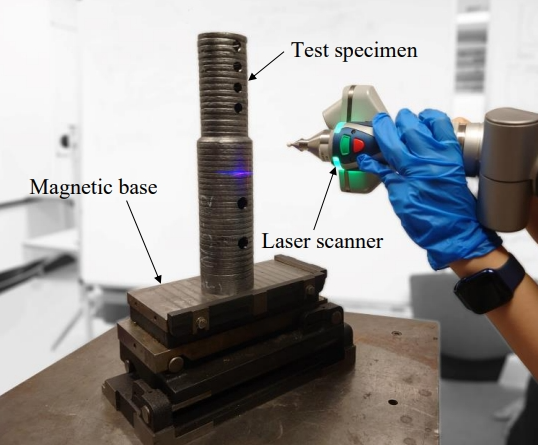
3D laser scanning of test specimens.
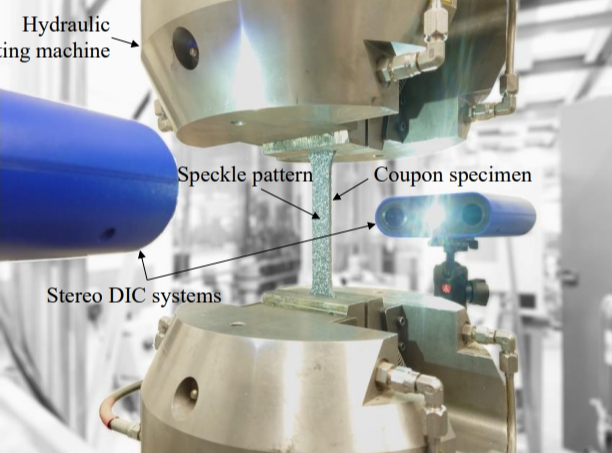
Tensile coupon test setup.
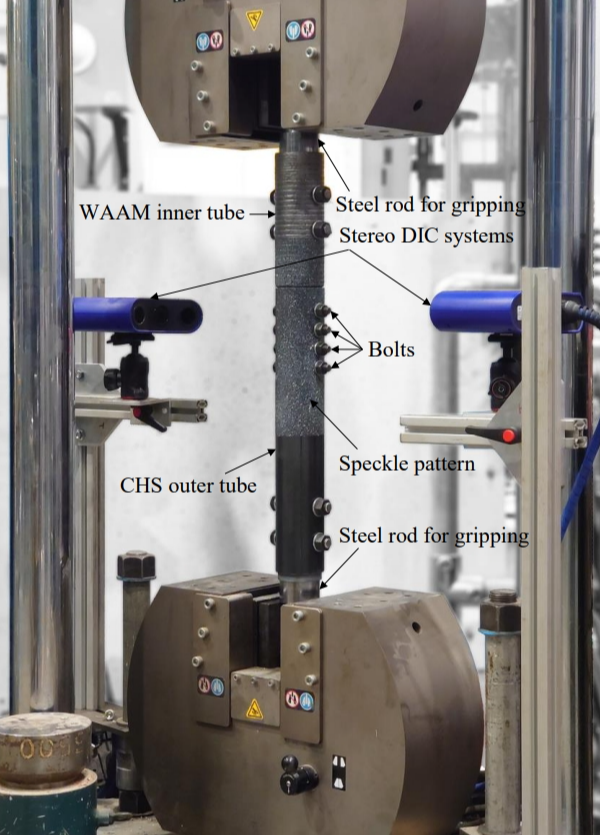
Tensile test setup for hybrid sleeve connections.
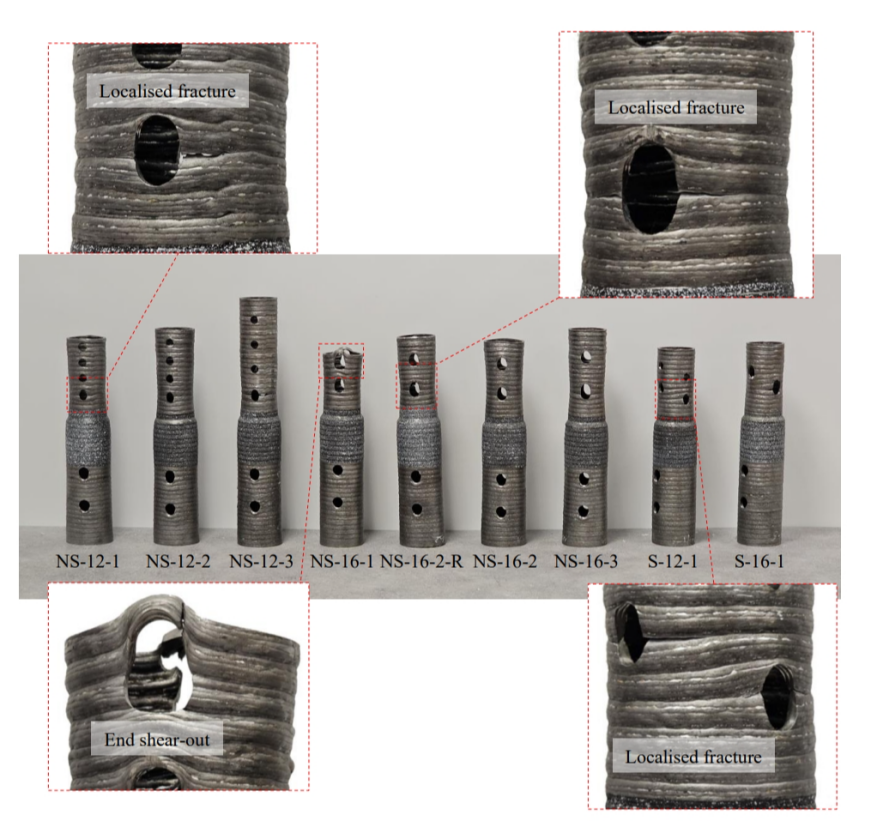
WAAM parts in hybrid sleeve connection specimens after testing.
The comprehensive experimental programme confirmed the structural performance of the proposed hybrid sleeve connections. Comparisons with resistance predictions according to current Eurocode 3 (EC3) design methods highlighted areas for further improvement, thereby underpinning the practical implementation of WAAM in structural engineering applications.
RONGSU Technology provided technical support throughout the study, successfully fabricating the WAAM hybrid sleeve connection specimens and supporting the associated experimental testing programme. Leveraging its core Wire Arc Additive Manufacturing expertise, RONGSU has independently developed WAAM systems and has delivered approximately 400 structural components, totalling several tonnes of printed material.
Most recently, RONGSU launched the AMmake S2 Series (Mega version), featuring a build envelope of up to 6 metres and a peak deposition rate of 8 kg/h, enabling efficient fabrication and batch production of small-scale, medium-scale, and large-scale complex structural components.