
RONGSU Supports SJTU's Top-Journal Study on WAAM Austenitic Stainless Steel Bolted Connections
Recent advancements in the steel manufacturing industry have led to heightened expectations for the design of steel structures. Wire arc additive manufacturing technology presents substantial potential in constructing large-scale steel structures with complex configurations, due to its relatively high deposition rate, low cost and less limitation on building size. To enable wider application of WAAM in structural engineering, a comprehensive understanding of the structural behavior of WAAM steel connections is essential. Bolted connections stand as the predominant load transferring method employed in steel construction, which are integral in providing flexibility for assembly/disassembly as well as assuring the structural integrity and longevity. Previous studies on WAAM carbon steel bolted connections have shown that the anisotropic characteristics of WAAM materials can significantly influence failure modes and load-bearing capacity. Although anisotropy in WAAM stainless steel is generally more pronounced than in WAAM carbon steel, systematic studies on the mechanical performance of bolted connections made from WAAM austenitic stainless steel remain scarce.
01 Filling the Research Gap in WAAM Austenitic Stainless Steel Bolted Connections
To address this research gap, a research team led by Associate Professor Mantai Chen from the Department of Civil Engineering at Shanghai Jiao Tong University, in collaboration with Nanyang Technological University, Harbin Institute of Technology, The Hong Kong Polytechnic University, and the University of Edinburgh, recently published a study titled “Behavior of wire arc additively manufactured 316L austenitic stainless steel single shear bolted connections” in Thin-Walled Structures, a top-tier (CAS Q1) journal in the field of engineering and technology. RONGSU provided technical support for specimen fabrication in this study.
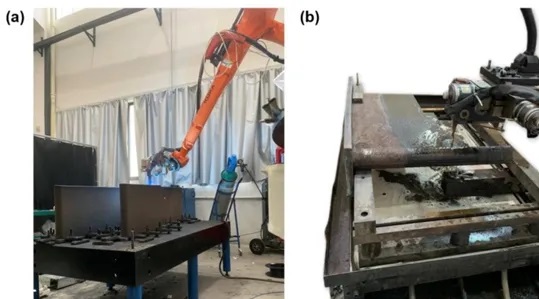
All test specimens were fabricated using a six-axis WAAM platform provided by RONGSU. ER316L austenitic stainless steel wire with a diameter of 1.2 mm was used as the feedstock to produce flat oval tubes via the WAAM process. Cold Metal Transfer (CMT) technology was employed, and with the assistance of coolant, WAAM austenitic stainless steel plates were obtained from the flat sections of the tubes through wire cutting, forming the bolted connection specimens.
02 Experimental Investigation of WAAM Austenitic Stainless Steel Bolted Connections
The study conducted an experimental investigation into the mechanical performance of WAAM 316L austenitic stainless steel single-shear bolted connections. A total of 44 WAAM 316L specimens were fabricated and tested. The paper provides a detailed description of the specimen fabrication process, three-dimensional laser scanning of specimen geometry, and material property characterization. Key experimental results—including load–deformation behavior, load-bearing capacity, and typical failure modes—are reported and analyzed. The effects of bolt position and loading direction on the connection performance are also discussed in detail.
Furthermore, the experimentally obtained connection capacities were compared with predictions from relevant design standards, including prEN 1993-1-8, prEN 1993-1-4, and ANSI/AISC 370-21, as well as existing design recommendations, to evaluate their applicability to the design of WAAM austenitic stainless steel single-shear bolted connections.
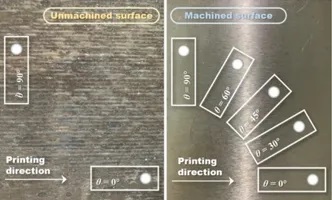
Fig. 2. Orientation convention of specimens related to the printing layer direction.
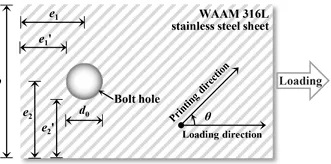
Fig. 3. Definition of nomenclatures.
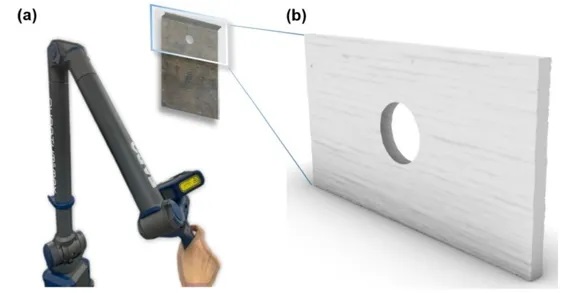
Fig. 4. Geometric measurement: (a). 3D laser scanning; (b). Data processing in Rhino.
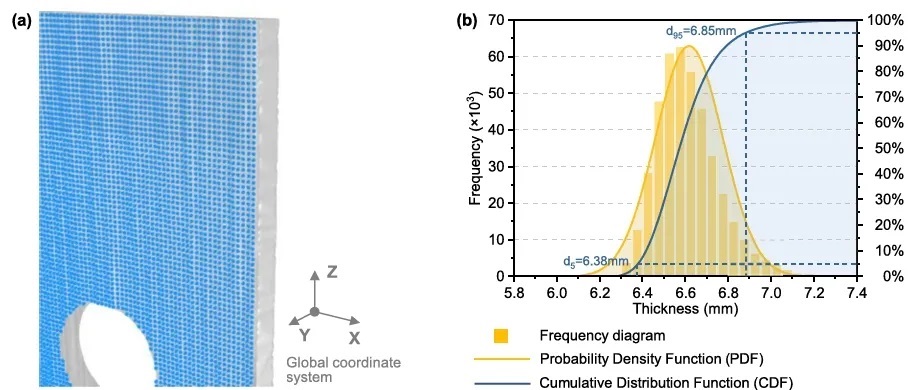
Fig. 5. Geometric analysis for unmachined specimen: (a). Schematic view of cloud point generation for geometric analysis; (b). Thickness distribution of typical unmilled specimen UM-90-1.5-3.0.
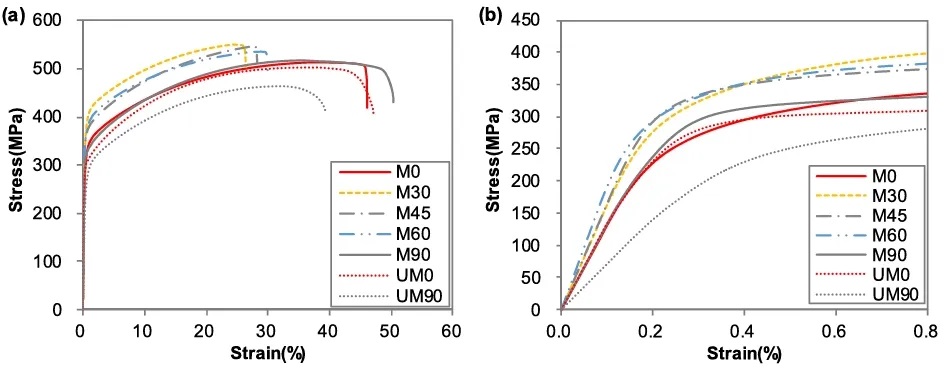
Fig. 6. Stress-strain curves of WAAM 316L austenitic stainless steel specimens with different test orientations: (a). Full range; (b). Initial stage.
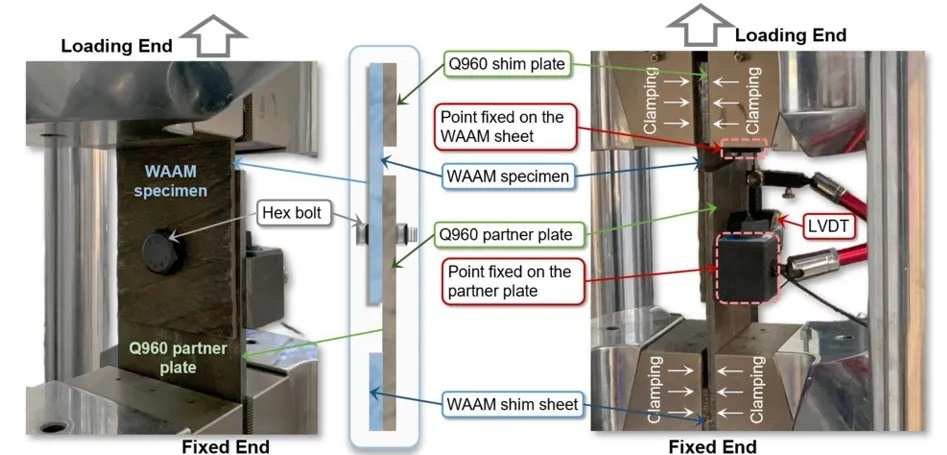
Fig. 7. Single-lap shear test setup.
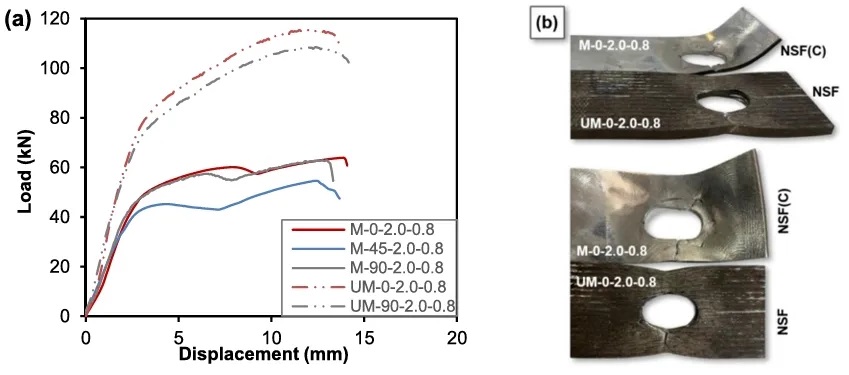
Fig. 8. Net section fracture: (a). Load-displacement curves; (b). Photos of specimens failed in NSF and NSF(C) patterns.
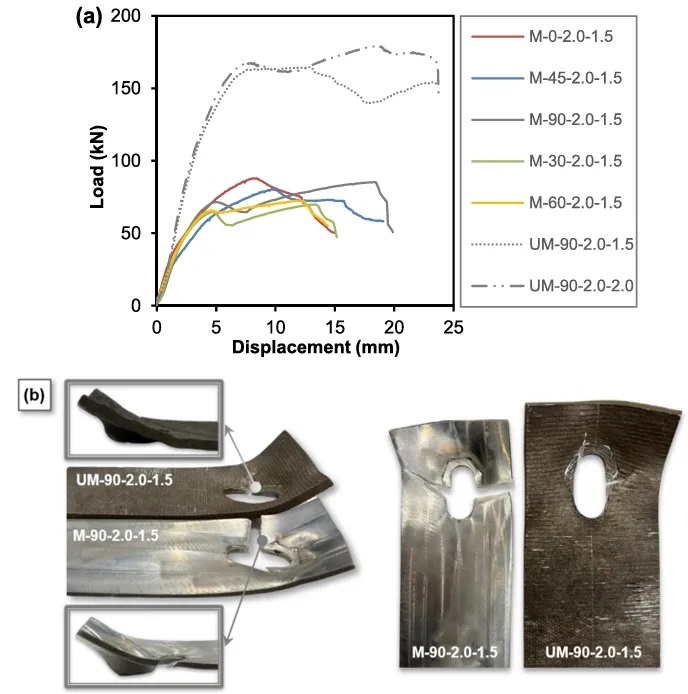
Fig. 9. Localized tearing failure: (a). Load-displacement curves; (b). Photos of specimens failed in LTF pattern.
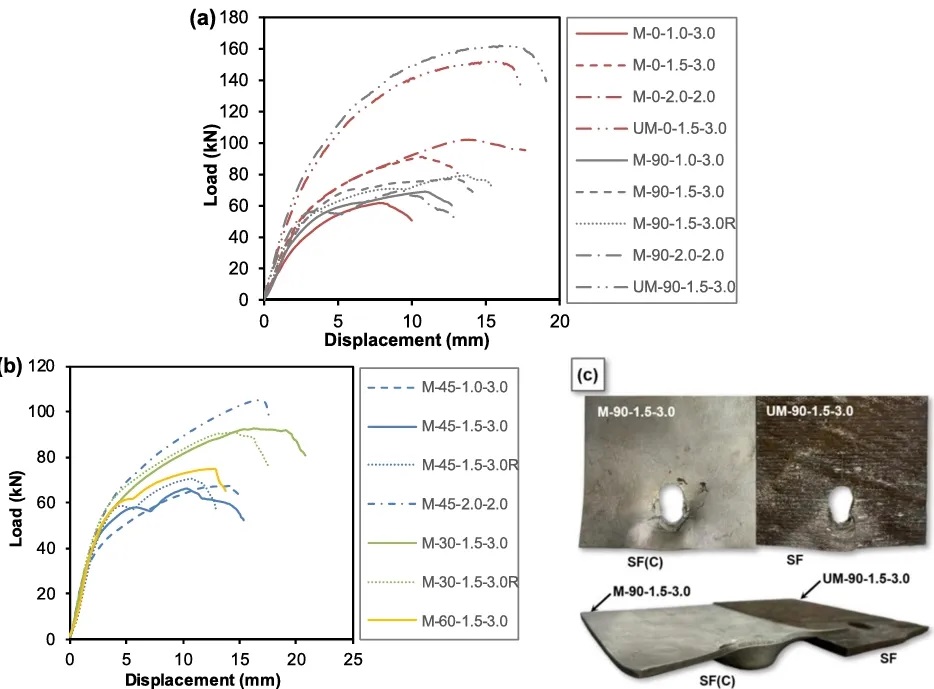
Fig. 10. Shear-out failure: (a). Load-displacement curves of specimens with test orientation of 0◦ or 90◦; (b). Load-displacement curves of machined specimens with test orientation of 30◦/45◦/60◦; (c). Photos of specimens failed in SF and SF(C) patterns.
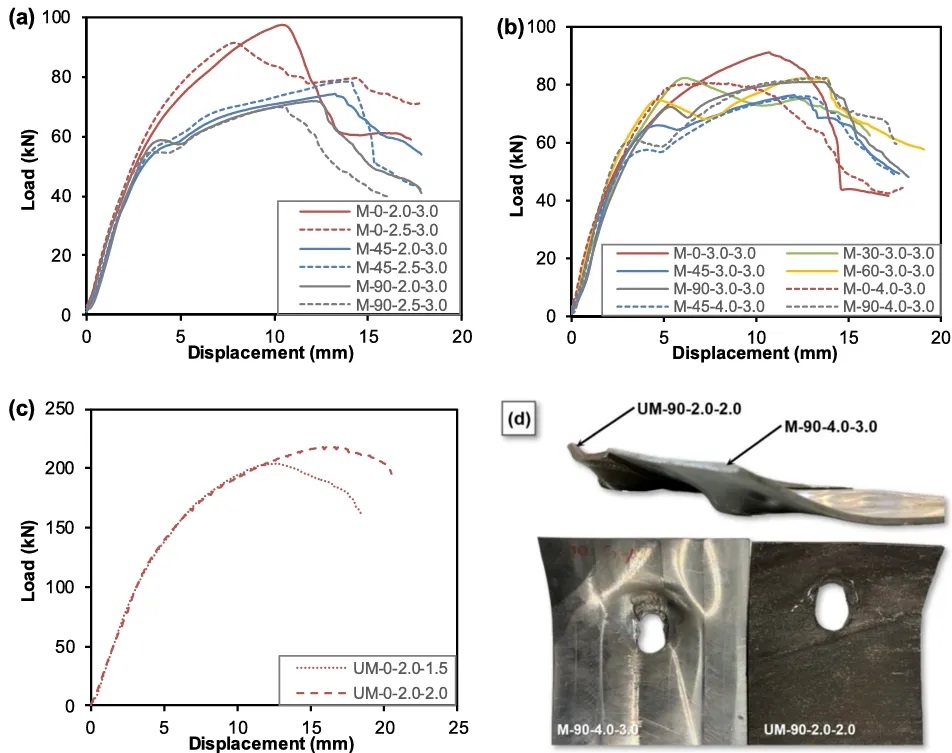
Fig. 11. Curl-bearing failure: (a). load-deformation curves of specimens with e1' ≤ 2.5d0; (b). load-deformation curves of specimens with e1' > 2.5d0; (c). loaddeformation curves of unmachined specimens (d). typical failure photos.
03 RONGSU Remains Committed to Supporting Scientific Research
RONGSU provided comprehensive technical support throughout this study, successfully completing the fabrication and testing of all 44 WAAM 316L austenitic stainless steel single-shear bolted connection specimens.
One-Stop Integrated Metal 3D Printing Services by RONGSU
As a high-tech enterprise specializing in wire-feed metal additive manufacturing, RONGSU has established mature capabilities in both wire laser and wire arc additive manufacturing. The company has independently developed the Laser One laser wire-feed additive manufacturing system and the STAR series of arc-based additive manufacturing equipment.
RONGSU offers comprehensive, end-to-end DED wire-feed metal additive manufacturing services, supporting more than 30 metal materials. To date, the company has delivered approximately 600 printed components, totaling tens of thousands of kilograms, and has collaborated with dozens of leading universities and research institutions worldwide to provide technical support for advanced scientific research.