
Tianjin University Advances Topology-Optimized Tubular Steel Joints with Support from RONGSU
Recently, a research team led by Associate Researcher Wang Zhongxing at Tianjin University has carried out a series of studies on the topology optimization of tubular steel intersecting joints. RONGSU provided technical support for this research, fabricating steel tubular joint specimens using Wire Arc Additive Manufacturing (WAAM).
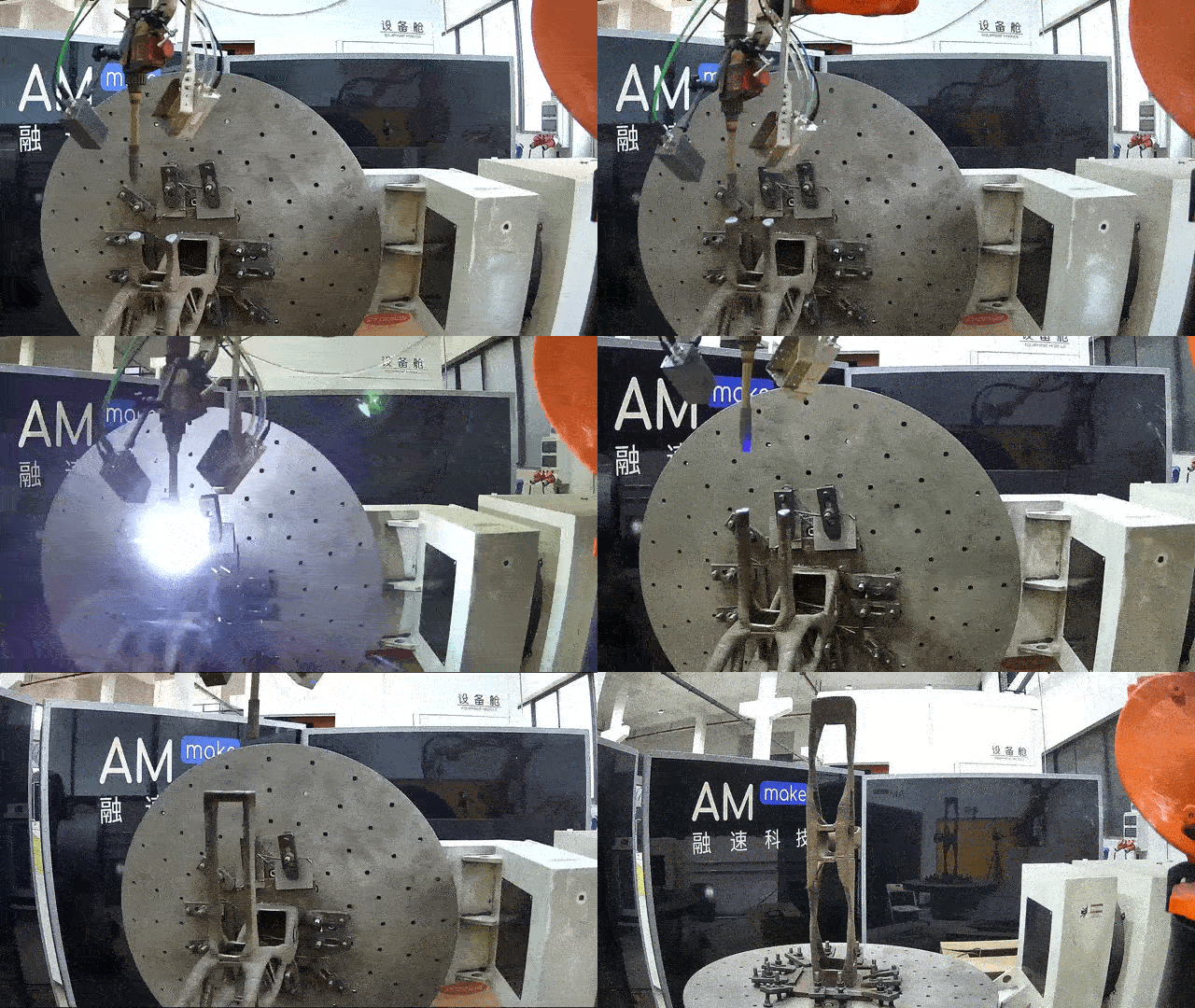
01 | Wire Arc Additive Manufacturing Addresses New Challenges in Steel Joint Fabrication
Tubular steel intersecting joints are widely used in high-rise buildings, long-span spatial structures, and sea-crossing bridges due to their aesthetic form, favorable load-transfer behavior, low self-weight, and high load-bearing capacity. As critical components in steel structures, these joints typically consist of multiple steel tubes with varying orientations and diameters.
At present, tubular intersecting joints are mainly manufactured using welding or casting. However, for complex joint geometries, welding often suffers from difficulties in quality control, while casting requires additional mold fabrication, resulting in long production cycles and high overall costs.
Wire Arc Additive Manufacturing (WAAM) offers an innovative solution to these challenges. Compared with other metal additive manufacturing technologies, WAAM features high deposition rates, lower manufacturing costs, virtually unlimited build size, and high design freedom, making it particularly well suited to the needs of the construction industry. WAAM has already been applied in architectural engineering for the fabrication of complex and optimized joints, truss structures, and large-scale pedestrian bridges.
Nevertheless, due to its unique manufacturing characteristics, WAAM-produced materials may exhibit mechanical properties that differ from those of conventionally manufactured materials, as well as greater geometric irregularities. As a result, WAAM structural components can show distinct structural performance, necessitating further experimental investigation, theoretical analysis, and the development of design methodologies specifically tailored to WAAM components.
02 | Research on Topology-Optimized Intersecting Joint Structures
Focusing on WAAM-fabricated tubular intersecting joints, Associate Researcher Wang Zhongxing and his team conducted experimental and theoretical studies in two main areas:
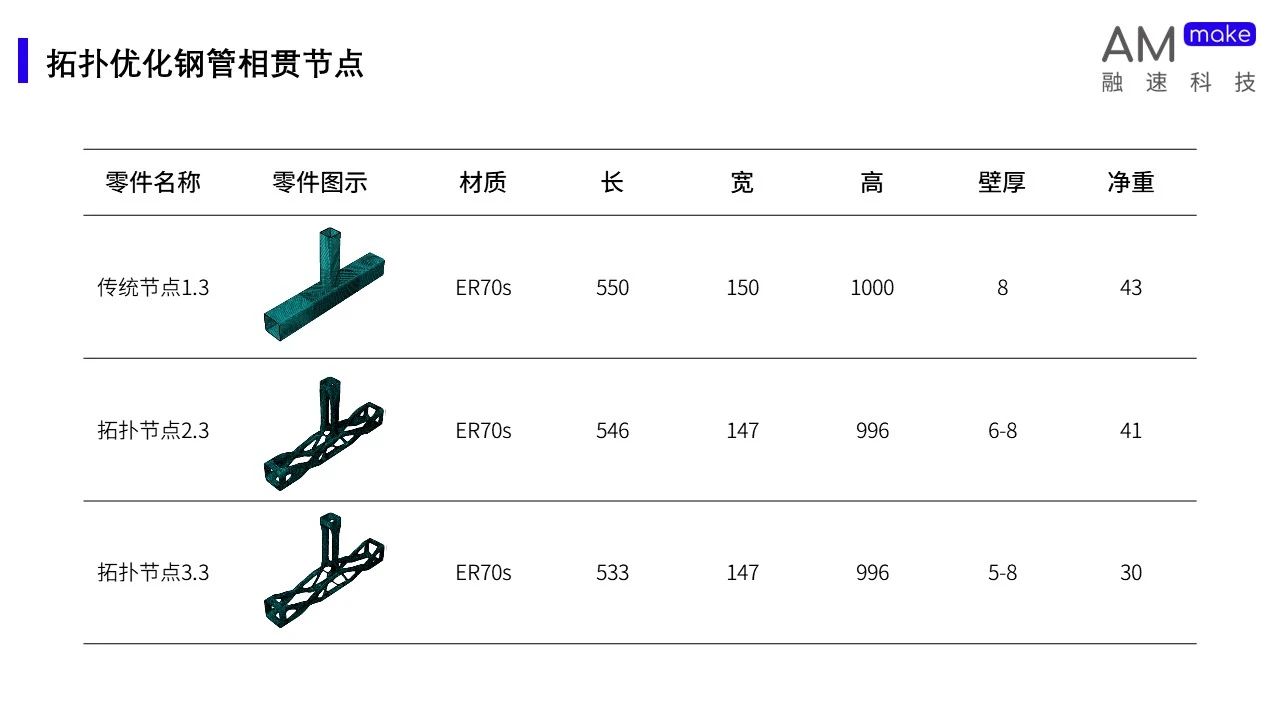
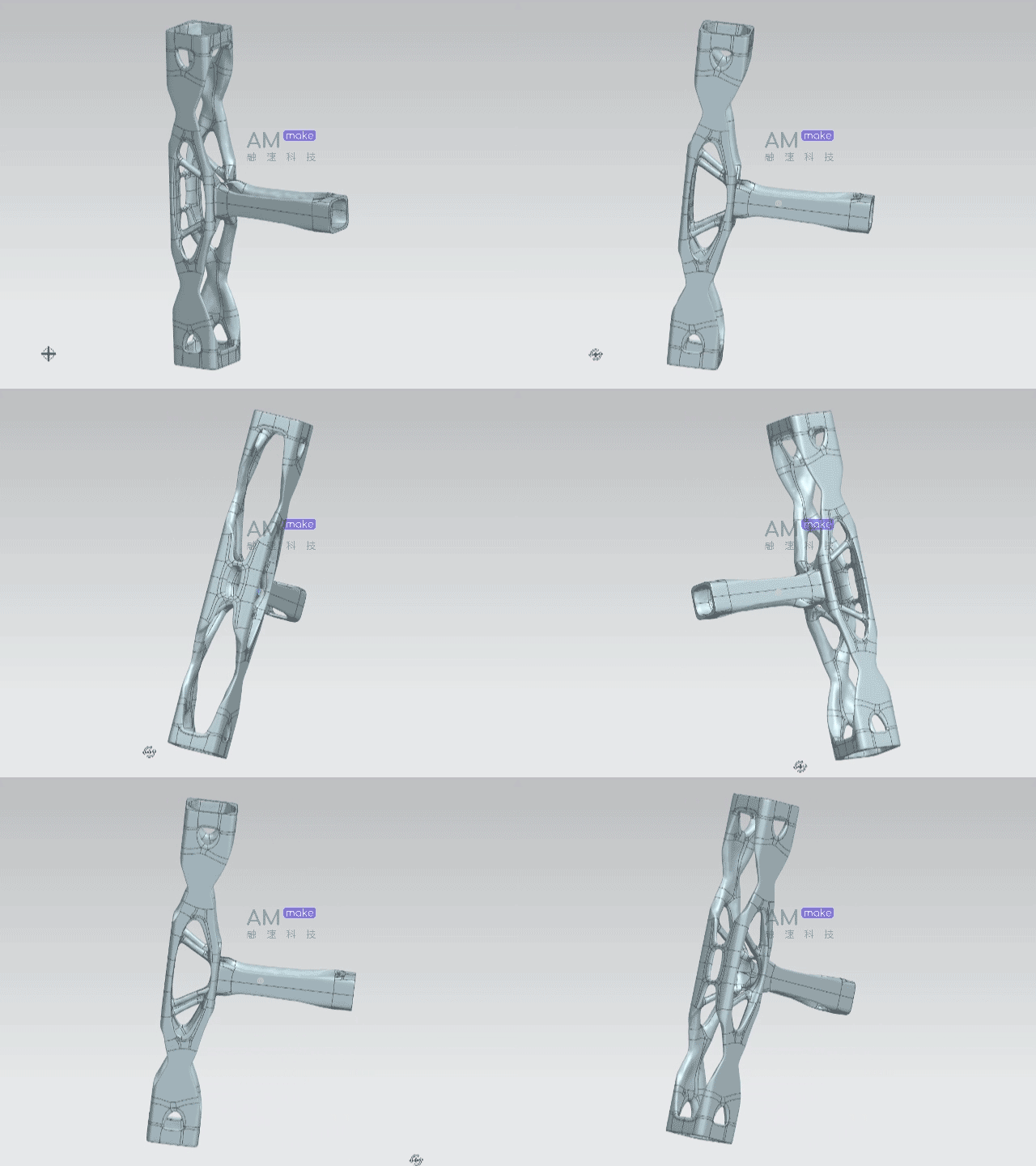
(1) Intersecting joints with standard geometries
Static loading tests were performed on intersecting joints manufactured using both WAAM and conventional methods. The mechanical behavior and performance differences between WAAM components and traditionally fabricated components were analyzed and compared to assess the applicability and accuracy of existing design codes.
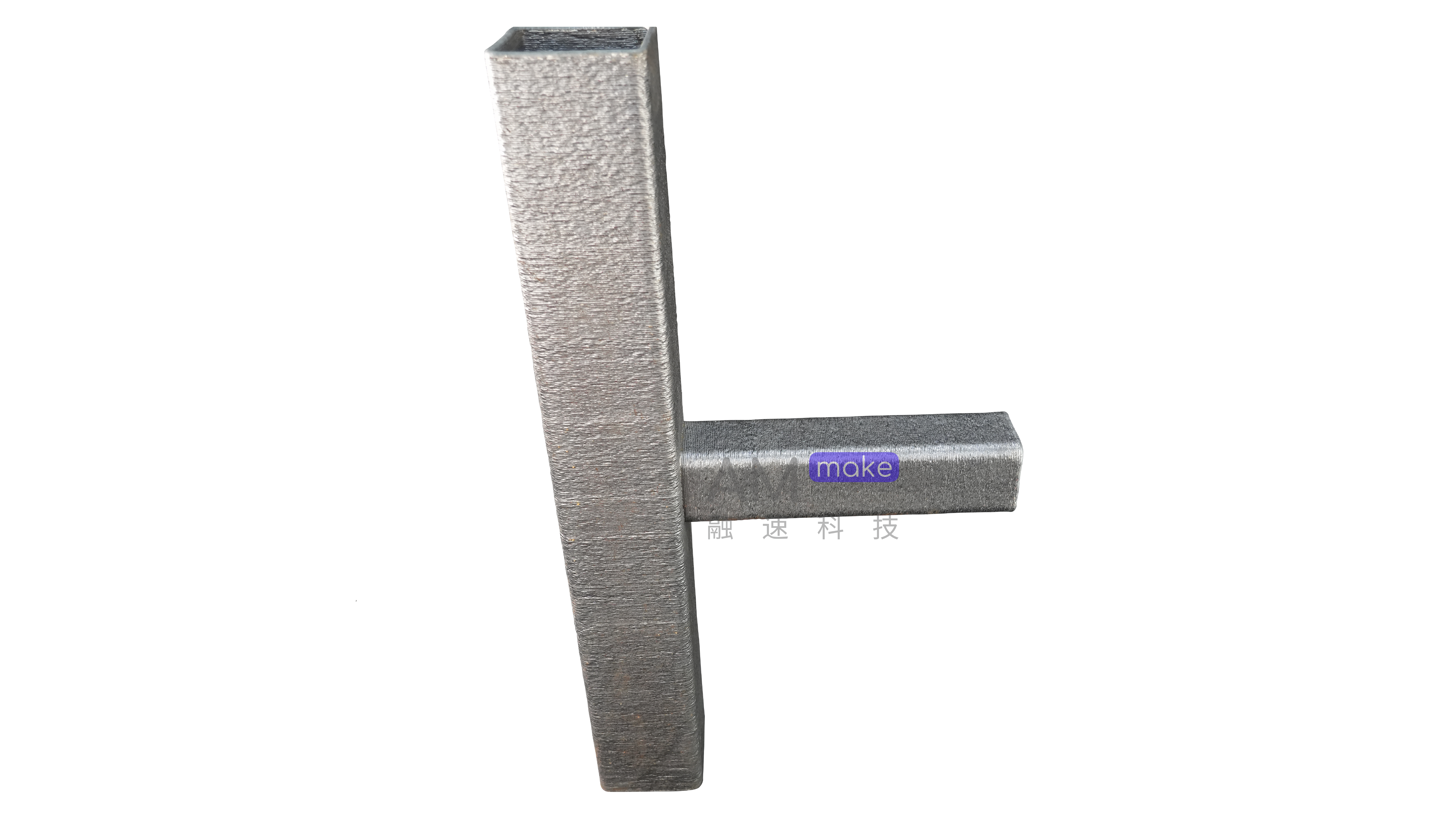
(2) Intersecting joints with optimized geometries
Leveraging the advantages of WAAM in fabricating complex and lightweight structures, the research team combined WAAM with topology optimization techniques to design and manufacture optimized intersecting joints. Static tests were conducted on these topology-optimized WAAM joints to improve material efficiency, structural performance, and functional integration. Related research outcomes are currently being compiled.
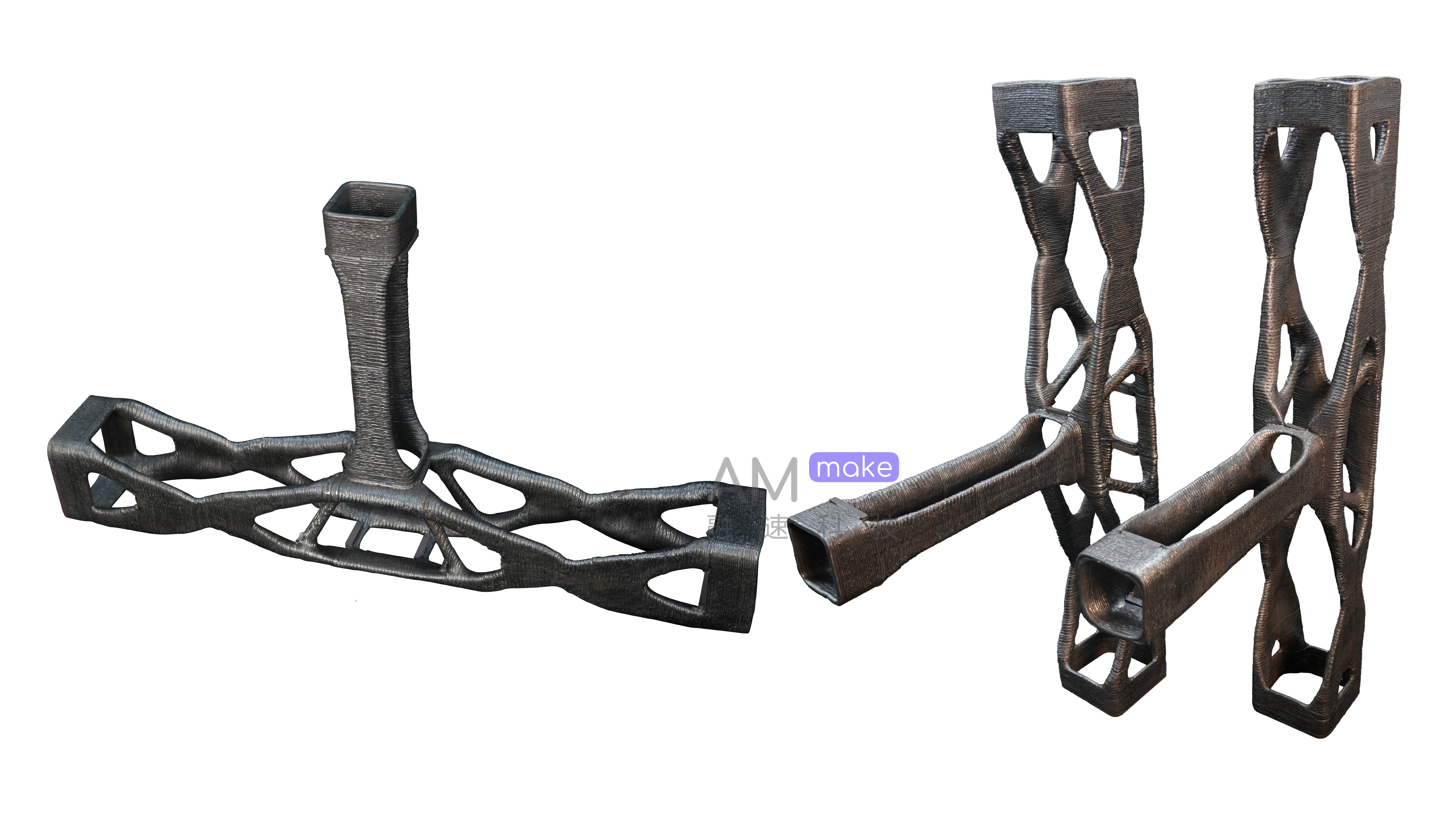
RONGSU has established mature capabilities in both laser wire additive manufacturing and wire arc additive manufacturing, supported by its self-developed Laser One laser wire DED system and STAR series WAAM equipment. The company provides one-stop DED metal wire additive manufacturing services and has collaborated with dozens of leading universities and research institutions worldwide, offering technical support for advanced experimental research.